Daily Sleep Protocol
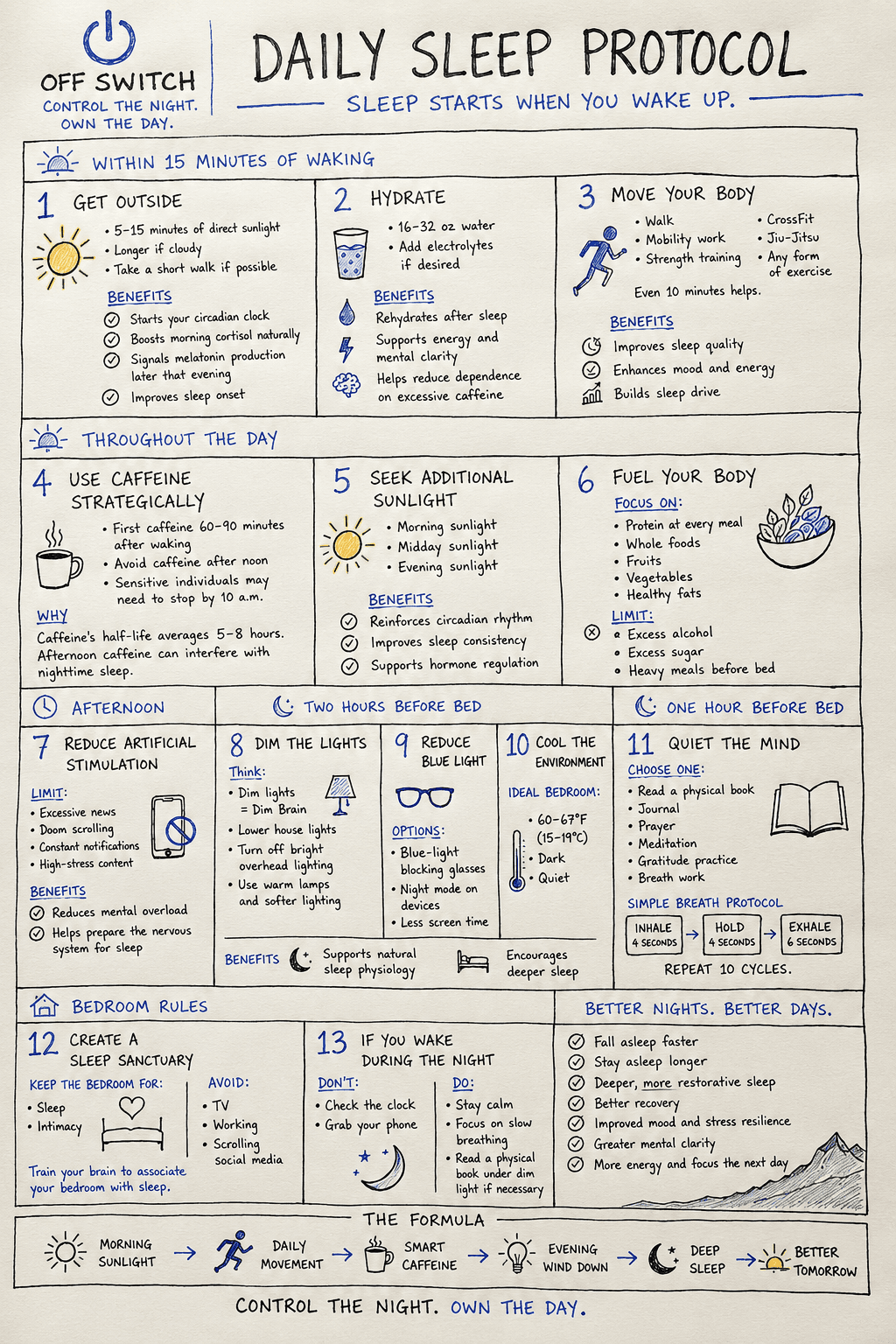
Sleep starts when you wake up. Getting better sleep isn't just about what you do in the 30 minutes before bed — your body's ability to fall asleep, stay asleep, and recover overnight is shaped by what you do all day long.
The Daily Sleep Protocol is a simple framework designed to support your natural circadian rhythm, build healthy sleep pressure throughout the day, and create the right conditions for deeper, more consistent sleep at night.
In This Guide
Start Your Day Right
Within 15 minutes of waking
Get Outside
Spend 5–15 minutes outdoors in natural light, preferably with direct sunlight when available. Morning light is one of the strongest signals to your brain that the day has started. This helps anchor your circadian rhythm and helps set the timing for melatonin production later that evening.
Hydrate
Drink 16–32 ounces of water after waking. Add electrolytes if desired. After going several hours without fluids overnight, hydration is a simple way to support normal physical and mental performance as you begin your day.
Move Your Body
Walk, stretch, lift, do CrossFit, Jiu-Jitsu, mobility work, or whatever form of movement works for you. Even 10 minutes counts. Regular physical activity can support sleep quality while helping build the natural drive for sleep later in the day.
Build Better Sleep Throughout the Day
Use Caffeine Strategically
You don't necessarily need to eliminate caffeine — you need to be intentional with it. Consider waiting 60–90 minutes after waking before your first caffeine and avoid using it later in the day. Because caffeine can remain in the body for hours, afternoon caffeine may still affect your ability to fall asleep or achieve quality sleep that night. People vary significantly in their sensitivity to caffeine, so adjust your cutoff based on how your body responds.
Seek Additional Sunlight
Don't make morning sunlight your only exposure to natural light. Get outside again during the day when possible. Morning, midday, and evening light exposure provide your brain with environmental cues that help reinforce your normal sleep-wake rhythm.
Fuel Your Body
Build your meals around quality nutrition: protein, whole foods, fruits, vegetables, and healthy fats. Limit excessive alcohol, excess added sugar, and very heavy meals immediately before bed.
Start Turning Down the Noise
As the day winds down, begin reducing the things that keep your brain in a constantly stimulated state. Limit excessive news, doom scrolling, constant notifications, and high-stress content — especially later in the day.
The goal isn't to completely disconnect from the world. It's to give your brain an opportunity to transition out of constant stimulation before you're asking it to sleep.
Two Hours Before Bed
Dim the Lights
Lower the lighting throughout your home. Turn off unnecessary bright overhead lights and use warmer, softer lighting where possible.
Reduce Blue and Bright Light Exposure
Reduce screen time when practical, use night modes on your devices, or consider blue-light-blocking glasses. More broadly, aim to reduce bright light exposure as bedtime approaches.
Cool the Environment
Create a bedroom that is cool, dark, and quiet. A temperature around 60–67°F (15–19°C) is a commonly recommended starting range, but comfort varies by person.
One Hour Before Bed
Quiet Your Mind
Choose something that helps your brain transition from the demands of the day toward sleep:
Read a physical book
Journal
Pray
Meditate
Practice gratitude
Perform slow breathing exercises
Simple Breathing Pattern
4s
Inhale
4s
Hold
6s
Exhale
Repeat for approximately 10 cycles.
This isn't about forcing yourself to fall asleep. It's about consistently giving your body cues that the day is ending.
Make Your Bedroom a Sleep Sanctuary
Train your brain to associate your bedroom with sleep and intimacy, rather than work, television, social media, and endless scrolling. The more consistently your bedroom becomes a place where you sleep rather than a place where you stay mentally engaged, the stronger that association can become.
If You Wake Up During the Night
Don't immediately grab your phone or repeatedly check the clock. Stay calm and focus on slow breathing. If you're unable to return to sleep, consider quietly reading a physical book under dim light until you begin feeling sleepy again.
The goal is to avoid turning a normal nighttime awakening into an extended period of stimulation, frustration, or anxiety.
The Formula
Better sleep isn't built from one supplement, one trick, or one perfect night. It's built through the signals you give your body all day long.
Control the Night. Own the Day.
Deep Reset Labs
Put the protocol to work
OFF SWITCH is formulated to support the exact conditions your body needs to reach and sustain deep sleep — lower cortisol, falling body temperature, and a quiet nervous system.
Shop Off Switch